Let’s talk about the ROI of a regulated nervous system.
I know. That sentence sounds like it belongs in a wellness brochure. Bear with me for sixty seconds.
Aetna — a $30 billion insurance company with 50,000 employees — decided to run the numbers on stress. What they found: a highly stressed employee costs the company $2,000 more per year in healthcare than a less-stressed peer.
After introducing mindfulness-based practices to more than 20,000 employees, healthcare costs fell by seven percent. That’s $6.3 million to the bottom line. Productivity gains came to $3,000 per employee.
Eleven-to-one return on investment.
Their CEO, Mark Bertolini, didn’t mandate this from a distance. He came to it after a life-threatening skiing accident left him in chronic pain. He tried the standard medical approaches. They didn’t work. Mindfulness did. He brought it to Aetna not because he believed in it philosophically but because he’d seen what it did to his own performance and decision-making under pressure.
General Mills launched its mindful leadership program in 2006 with 13 executives and has since trained more than 500 employees and 90 senior leaders. The outcomes: nearly 90 percent reported enhanced listening. More than 90 percent said the training improved their capacity for innovation. The VP who built the program was subsequently invited to present at the World Economic Forum in Davos. Not a yoga retreat. Davos.
So what is actually happening — and why does it work?
Your thinking brain — the prefrontal cortex — is where your best leadership lives. Strategy. Complex decisions. The nuanced conversation that requires both clarity and firmness.
Your emotional brain — the amygdala — processes every experience before your thinking brain gets involved. When it perceives threat, it redirects blood flow away from your prefrontal cortex toward survival functions. You go from strategic to reactive in nanoseconds. Without choosing to.
This is not a personality flaw. It is anatomy.
You cannot think yourself out of an amygdala response. By the time you tell yourself to calm down, the reactive response is already running. Telling a leader to stay calm under pressure without giving them the physiological tools to do it is like handing someone a fire extinguisher with no instructions.
The breath is the only physiological process that operates both automatically and voluntarily. Conscious breath control directly activates the parasympathetic nervous system and restores access to the prefrontal cortex. Documented neuroscience.
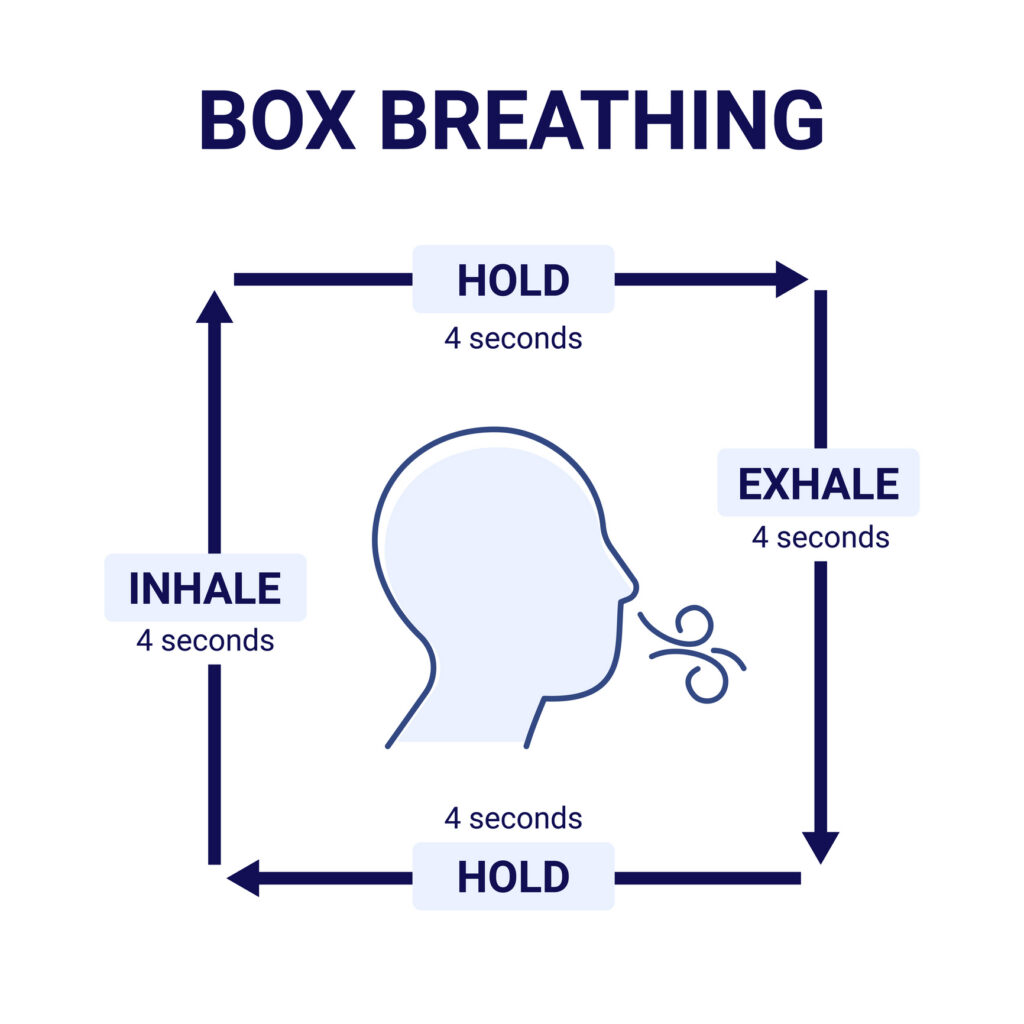
It is why US Navy SEALs use box breathing before high-stakes missions. Why Air Force fighter pilots use it before combat. Why a twenty-five-year-old soccer coach used it to keep twelve boys alive in a flooded cave in Thailand for eighteen days.
Not because it feels good. Because it works.
I spent twenty-five years in information technology before this work. I have no patience for interventions that don’t produce measurable outcomes. What fifteen years of coaching generals, CEOs, and federal senior leaders has shown me consistently: leaders who learn to regulate their nervous systems under pressure make better decisions, have fewer relationship ruptures on their teams, and retain their people at higher rates.
Brain. Body. Breath. Not a philosophy. An integrated performance system backed by research.
The question isn’t whether this works.
The question is whether you’re willing to find out.
Discover more from Margo Boster
Subscribe to get the latest posts sent to your email.