
Over the miles of riding a Harley-Davidson in all 50 states and Canada, my husband and I have had some unforgettable experiences — being stopped cold by a moose and her calf as they sauntered across the road (those animals are enormous), and riding on ice-heaving roads in Alaska that felt like hitting ski moguls at speed. There’s nothing quite like it.
Stepping away from the phone and the office is its own reward. But somewhere along the way, I started noticing that the road has a way of teaching you things. Here are a few that have stayed with me.
Communication is Everything
Mark and I developed our communication system years ago, and we continue it to this day.
Before I get on the bike, I tap his left shoulder and ask, “Ready?” I don’t move until he signals that he has the bike steady and balanced for my added weight. When we stop and I’m ready to get off, I tap his right shoulder. There’s no deep logic behind left versus right — it’s simply what we established, and it works.
Then came Yellowstone.
It was busier than I expected — not the quiet, scenic ride I’d imagined, but fun in its own way. We’d seen enough “Watch for Animals” signs over the years without ever spotting anything that we’d half-decided they were just there for the tourists.
That day, riding through the park on a beautiful sunny afternoon, I spotted them — a group of large, impressive bison grazing on the left side of the road.
Without thinking, I said, “Stop the bike, I want a picture!” — and before Mark could respond, I hopped off.
I hadn’t tapped his shoulder. I hadn’t waited for confirmation. I’d abandoned every habit we’d built over years of riding together.
We dropped the bike on a busy road, in full view of what felt like every tourist in Wyoming. The damage was minor — a small scrape. But Mark was furious. My ego was bruised. And I never got the photo.
LESSON: No matter how excited you are, how urgent it feels, or how obvious the right move seems — honoring your communication practices is what gets you to the outcome you actually want.
Passenger and Rider Are Not the Same Job
Being a skilled, experienced passenger does not qualify you to be the rider. I learned this firsthand.
After years on the back of the bike, I decided I was ready to ride my own. I took the motorcycle safety course. Passed it. Got my license. Put a deposit down on a new Harley-Davidson.
What I hadn’t counted on was how different it felt to actually be in charge of the machine. As a passenger, someone else managed the bike’s weight at a full stop, navigated sharp turns without overcorrecting, read the road ahead rather than just reacting to it, and made split-second decisions when conditions changed. I’d been along for all of it — but I hadn’t been doing any of it.
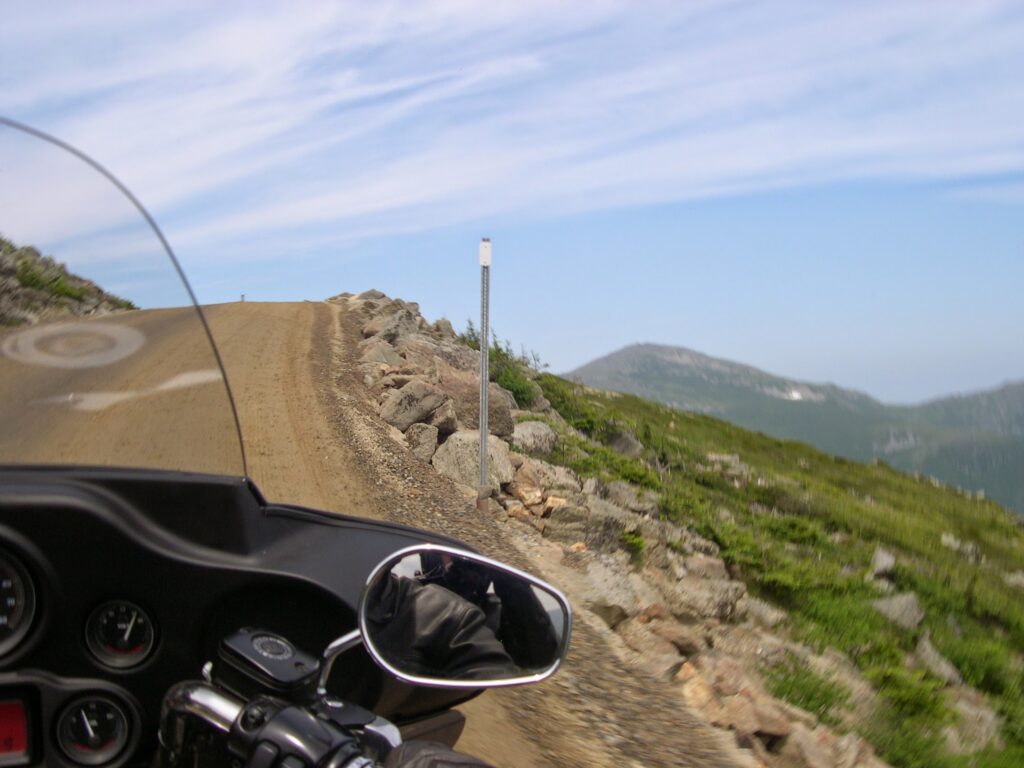
When it came time to pick up my Harley, I realized I didn’t want the job. It was a lot of work and a lot of responsibility. I made the deliberate choice to stay on the back and let Mark do the riding.
I see a version of this play out constantly in leadership. Team members second-guess or criticize their boss without any real understanding of what it takes to sit in that seat. Or they assume that because they’ve been close to leadership, they’re ready for it.
Sometimes they are. Often they’re not — and the gap isn’t about intelligence or work ethic. It’s about what you can only learn by actually holding the handlebars.
LESSON: Be a great passenger. Pay attention. Build your skills. And if leadership is the direction you choose, go in with eyes open about what you’re actually taking on. And invest in developing the necessary skills; don’t just rely on what you developed as a passenger.
Listen to Your Body
Long before I understood the neuroscience behind performance, the motorcycle was teaching me this lesson.
We cover fewer miles in a day now than we used to. That’s not a concession — it’s hard-won wisdom. Early on, we’d push through fatigue because the destination felt close enough. We’d skip a meal because stopping seemed like an interruption. We’d ride into the afternoon heat because the schedule said so.
Every one of those decisions costs us something.
Tired, hungry, or overheated, your reaction time slows, your judgment softens, and your ability to read what’s coming degrades — often before you’re even aware it’s happening. On four wheels, you might get away with it. On two, the margin for error essentially disappears. A slight drift, a delayed response, a turn taken a half-second late — consequences that are recoverable in a car are not always recoverable on a motorcycle.
Here’s what the science confirms what the road already taught me: your brain and body are not separate systems. When your body is running on empty — physically depleted, dysregulated, or pushed past its limits — your cognitive performance follows. The prefrontal cortex, the part of your brain responsible for judgment, strategic thinking, and emotional regulation, is among the first to go offline under stress and fatigue.
You don’t crash in the boardroom the way you might on a bike. But the erosion is real. It shows up in the decision you rushed, the conversation you misread, the moment you needed to be fully present and weren’t.
LESSON: Your body is constantly giving you information. The question is whether you’ve trained yourself to hear it — and whether you respect it enough to act on what it’s telling you.
The Power of The Breath
I was first introduced to the power of the breath in a yoga studio, but it really came home to me on the back of a Harley-Davidson motorcycle. A year after my husband and I had a nasty motorcycle accident, we went out on the road again. As we entered a turn, just like the one that had caused the accident, I instinctively gasped and held my breath. My whole body braced.
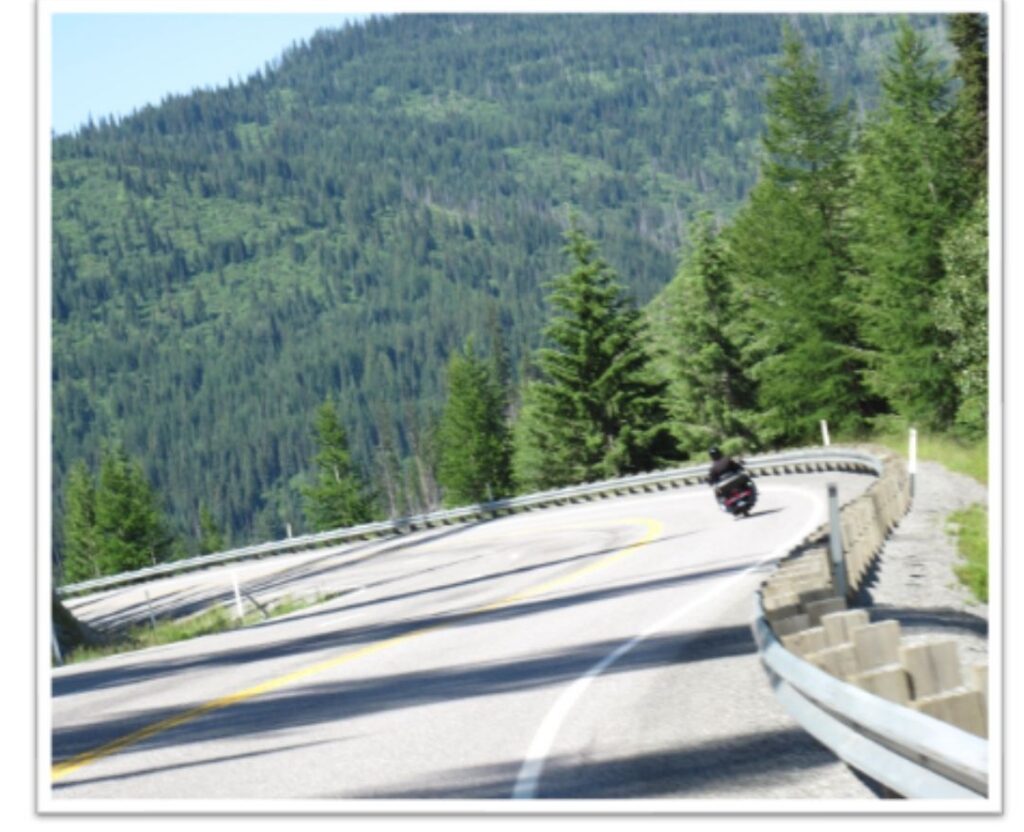
Then I remembered what I had learned on the yoga mat. I exhaled consciously as we entered the curve.
Long, slow inhale as we came out of it. My body stopped clenching. The anticipated fall never came.
And I remember thinking – if this works here, where else does it work?
I started checking in with my breath before high-stakes meetings. Before difficult conversations. Before walking into a room I could already feel the tension before I opened the door.
Shallow breathing from your upper chest tells your body you are in danger.
Deep breathing from your lower diaphragm tells your body that all is well.
It worked. Not always perfectly. But enough to change how I lead.
LESSON: We take approximately 17,000 breaths a day. Almost all of them are unconscious. It pays to notice what those breaths are doing to your nervous system, and therefore to your leadership.
The road has a way of teaching you what the classroom can’t. Communication, physical awareness, knowing your role, the power of the breath — none of it is abstract when the consequences are immediate. The same is true in leadership.
The leaders who perform when it counts aren’t the ones who avoided the hard miles. They’re the ones who paid attention along the way.
What are you paying attention to – or what are you avoiding?
Discover more from Margo Boster
Subscribe to get the latest posts sent to your email.