
Twelve conservation scientists walked into a retreat center in Sedona, Arizona, carrying the weight of the planet. Not metaphorically — these were researchers and practitioners who face biodiversity loss and climate grief every single day, often without the language, the community, or the tools to process it.
What happened over the next four days reminded me of something I tell leaders all the time: pausing is not a luxury. It is a prerequisite.
In late February, I co-facilitated the Resilience in Conservation Retreat at the Sedona Mago Center — a 3-night, 4-day experience conceived by Dr. Leah Gerber, sponsored by the ASU Center for Biodiversity Outcomes, and supported by researcher Dr. Olivia Davis. The participants were conservation scientists, researchers, and sustainability leaders. People who show up every day for the planet.
Over four days, we moved through breathwork, meditation, yoga, group coaching, and reflective conversation. I led sessions on neuroplasticity, the nervous system under stress, the power of the pause, and values-driven leadership. My co-facilitator, Lila Caridade, guided participants through yoga practices, meditation, breathwork, and the physical and emotional landscape of grief, anger, and guilt.
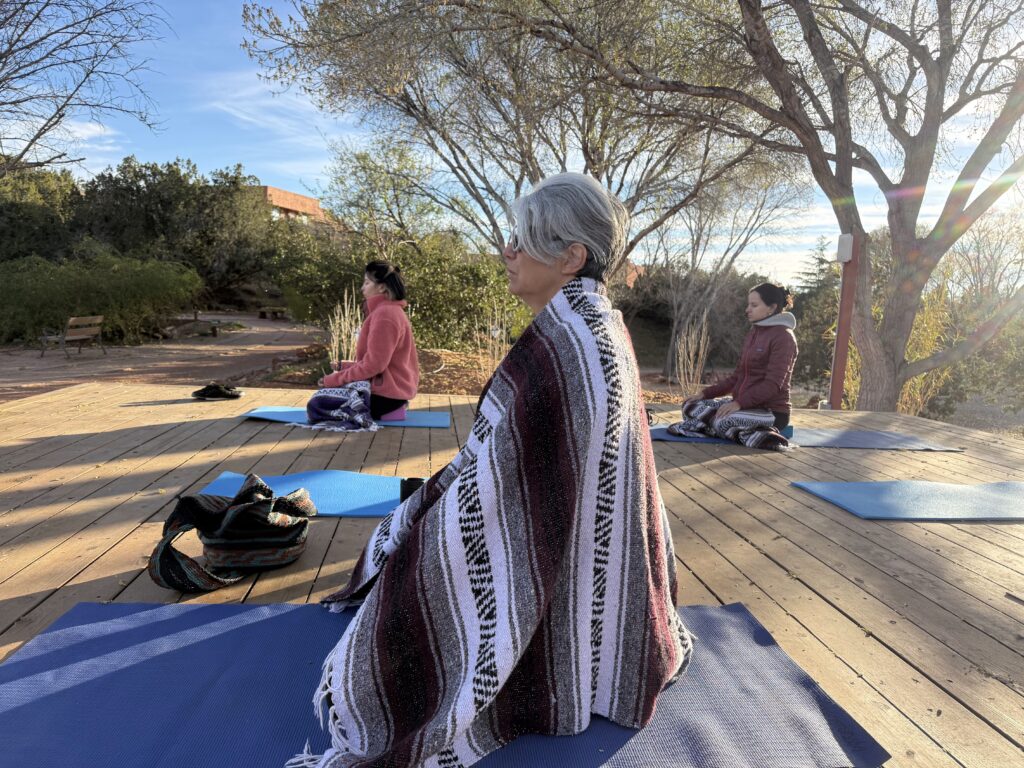
| What struck me most wasn’t what participants learned. It was what they already knew — and hadn’t had space to reach. Given room to pause, they became more themselves. Stories surfaced. Clarity returned. Purpose — which hadn’t disappeared, only been buried under urgency — became visible again. What I Witnessed in Sedona The scientists who came to Sedona weren’t failing. They were accomplished, committed, and highly competent. What they were missing wasn’t skill or knowledge. They were missing protected space. Intentional, unhurried space to feel what they’d been carrying, to name it in the presence of people who understood, and to reconnect with why they do the work at all. |
By Day 2, something shifted. Conservation professionals have a word for what many of them carry quietly — ecogrief. The weight of witnessing environmental loss without space to process it. When people who had been holding that privately discovered the person across from them was holding it too, something loosened in the room By Day 3, the coaching conversations weren’t about surviving the work; they were about thriving. They were about remembering why it matters. Participants left with something you can’t manufacture in a meeting: renewed clarity about their values, restored access to their own purpose, and practices — breathwork, mindfulness, journaling, body awareness — they could actually bring into daily life. That’s what a real pause does. Not escape. Not avoidance. An intentional interruption that gives the nervous system room to settle, so the brain can come back online fully. What They Noticed The conservation professionals in Sedona learned nothing that your leaders couldn’t master in a boardroom. The practices don’t change; only the willingness to make space does. Here’s what participants took home after four days in Sedona: Emotions Aren’t a Weakness to Be Ignored; they are important messages worth listening to. After a particularly powerful exercise that invited participants to acknowledge, accept, and embody emotions, most were surprised to learn that ignoring emotions was neither healthy nor smart. As scientists, they had been reinforced in the belief that logic leads. Learning that emotions are automatic, adaptive responses in the body that signal what matters to us was a significant awareness – and permission – to notice, acknowledge, and listen to their emotions. The Power of Noticing, Not Judging: One participant put it simply: “It reminded me that it’s important to really pause and take stock of how I feel, and if I feel a ‘negative’ emotion, that doesn’t mean I’m wrong or bad. It is just a feeling.” That’s the whole practice, right there. Noticing without immediately assessing. Most of us have been trained to evaluate everything — including our own inner experience. Learning to just notice, without the instant judgment that follows, changes how you listen, how you decide, and how you lead. The Past Doesn’t Equal the Future: Learning about Eleanor Maguire’s neuroplasticity research was a turning point for many participants. Her work demonstrated that the brain can literally restructure itself — that it’s possible to retrain reactive patterns and intentionally shape new ones. At any age. Starting now. For scientists who traffic in evidence, this was the permission slip they hadn’t known they were waiting for. Knowing and Doing are Two Different Things: One participant shared, “I didn’t really expect to gain anything here, other than a relaxing trip to a beautiful location. I’ve been studying this stuff for years and thought I already knew everything I needed to know. However, what I’d forgotten was that knowing something isn’t of much use unless you practice it regularly; you need to take time to step away and remember.” That’s the whole argument for pausing, in one participant’s own words. |
The Power of Community: Something I didn’t fully anticipate was how much the room itself would do the work. These participants hadn’t come to commiserate — but when one person named what they’d been carrying quietly for years, and the person across from them said “me too,” something changed. You can’t manufacture that in a webinar. Conservation professionals are often isolated in their grief — surrounded by colleagues who understand the science but rarely talk about what it costs them personally.
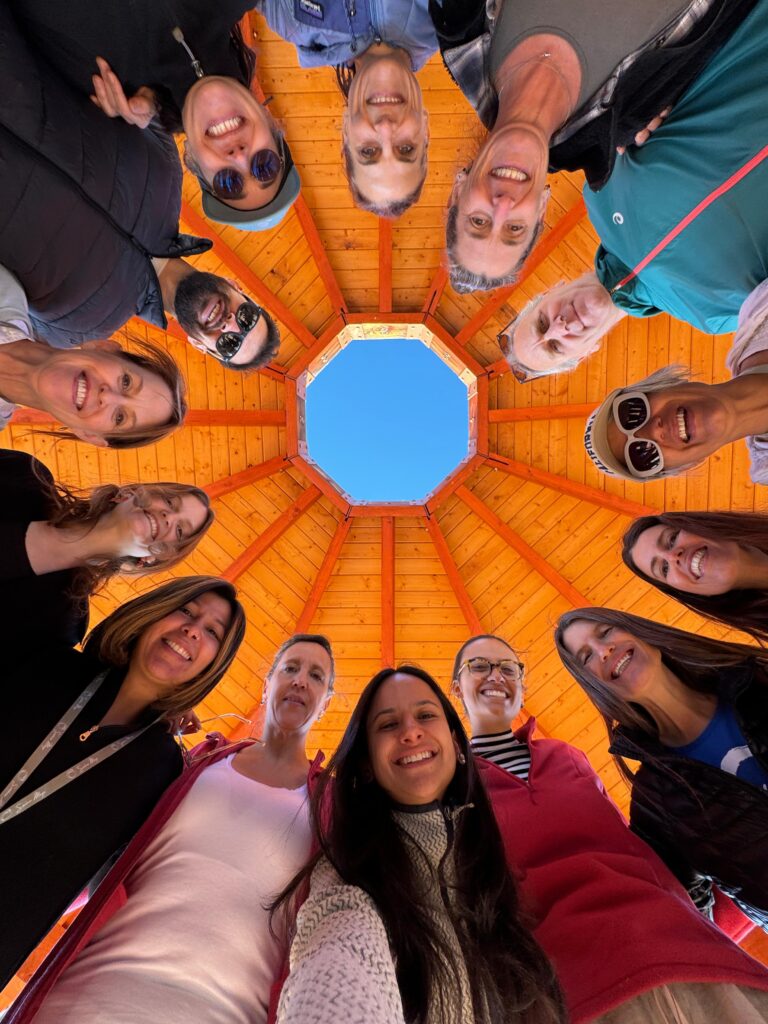
Four days in Sedona reminded this group that they weren’t alone. And it reminded me of something I see in every leadership context I work in: we are wired for connection, and we keep scheduling it last.
High performance requires recovery — not as a reward for hard work, but as part of the work itself. A walk without your phone. A journaling practice you actually keep. A retreat once a quarter, where you stop producing long enough to remember what you’re producing for. The leaders I’ve watched sustain themselves over the long haul aren’t the ones who push through everything. They’re the ones who know when to stop.
High performance requires recovery — not as a reward for hard work, but as part of the work itself.
Four Practices Worth Starting Today
You don’t need four days in Sedona to start. You just need to decide that what’s happening inside you matters as much as what’s happening around you — and then pick one thing and start practicing it.
⏸️ The Power of the Pause. Take one breath before you respond. Three seconds. I know that sounds almost insultingly simple. I’ve coached generals and CEOs who will tell you it changed how they lead. The breath interrupts the reaction. What comes after it is a choice.
🔍 Noticing. Most leaders walk into high-stakes meetings already carrying the last three conversations they had. Check in before you walk in. Tight shoulders? Jaw clenched? Breathing from your chest? Your body has been reading the situation longer than you have. Get curious about what it’s telling you before you open your mouth.
🟦 Box Breathing. Four counts in, hold four, four counts out, hold four. That’s it. Navy SEALs use this before high-stakes operations. Air Force pilots use it before combat. If it holds up in those environments, it will hold up before your next difficult conversation.
🔋 Intentional Recovery. High performance requires recovery — not as a reward for hard work, but as part of the work itself. A walk without your phone. A journaling practice you actually keep. A retreat once a quarter, where you stop producing long enough to remember what you’re producing for. The leaders I’ve watched sustain themselves over the long haul aren’t the ones who push through everything. They’re the ones who know when to stop.
The Leaders Who Sustain The Work
The conservation professionals who came to Sedona are already doing some of the most important work on the planet. My hope is that they left with what every leader deserves: the tools to sustain themselves so they can sustain the work.
That is what mindfully successful leadership looks like.
Sedona reinforced for me why I’ve been building what I’ve been building. For the past year, I’ve been quietly developing a corporate leadership program based on the Brain/Body/Breath framework. It’s a cohort-based experience that takes these practices off the page and into the culture, built for leadership teams who are serious about what it means to lead well under pressure.
More soon. If you want to be in that conversation early, reach out.
Discover more from Margo Boster
Subscribe to get the latest posts sent to your email.